
A DTC client was paying $4,800 a month to a UGC agency for 12 testimonial videos. We rebuilt the same brief on Arcads and Creatify for $250 in API spend, and started shipping 60 variants a week instead of 12 a month. The winning ad in week three was an AI avatar nobody could distinguish from a real creator. The agency contract did not get renewed.
AI UGC is one of those terms where the SEO definition (what platforms call themselves) and the operator definition (what is actually shipping in ad accounts) have drifted apart. The numbers below are from active client accounts in mid-April 2026, not screenshotted vendor pages.
What AI UGC actually means in 2026
"UGC" originally stood for user-generated content — a real customer or creator filming themselves with a phone, lit by a window, talking about a product. Brands ran it as ad creative because it converts at 2–4x the rate of polished studio video. The format itself became a category: phone-vertical, talking-head, casual, low-production-value-on-purpose.
AI UGC is that format, generated. An AI avatar (a stock face from the platform library or a custom-trained one of a real creator) reads a script in a 9:16 phone-shaped frame that looks like something a friend filmed. The avatar can be made to hold a product, switch backgrounds, change accents, and emote in a few preset modes. The output is a 15–60 second clip ready to drop into Meta, TikTok, or YouTube Shorts.
This is the dominant meaning today. There is an older, separate meaning floating around — AI tools that aggregate and moderate real customer-generated content, like gallery widgets that pull product photos from Instagram. That category exists but is not where 95% of search traffic is pointed.
How an AI UGC ad gets produced
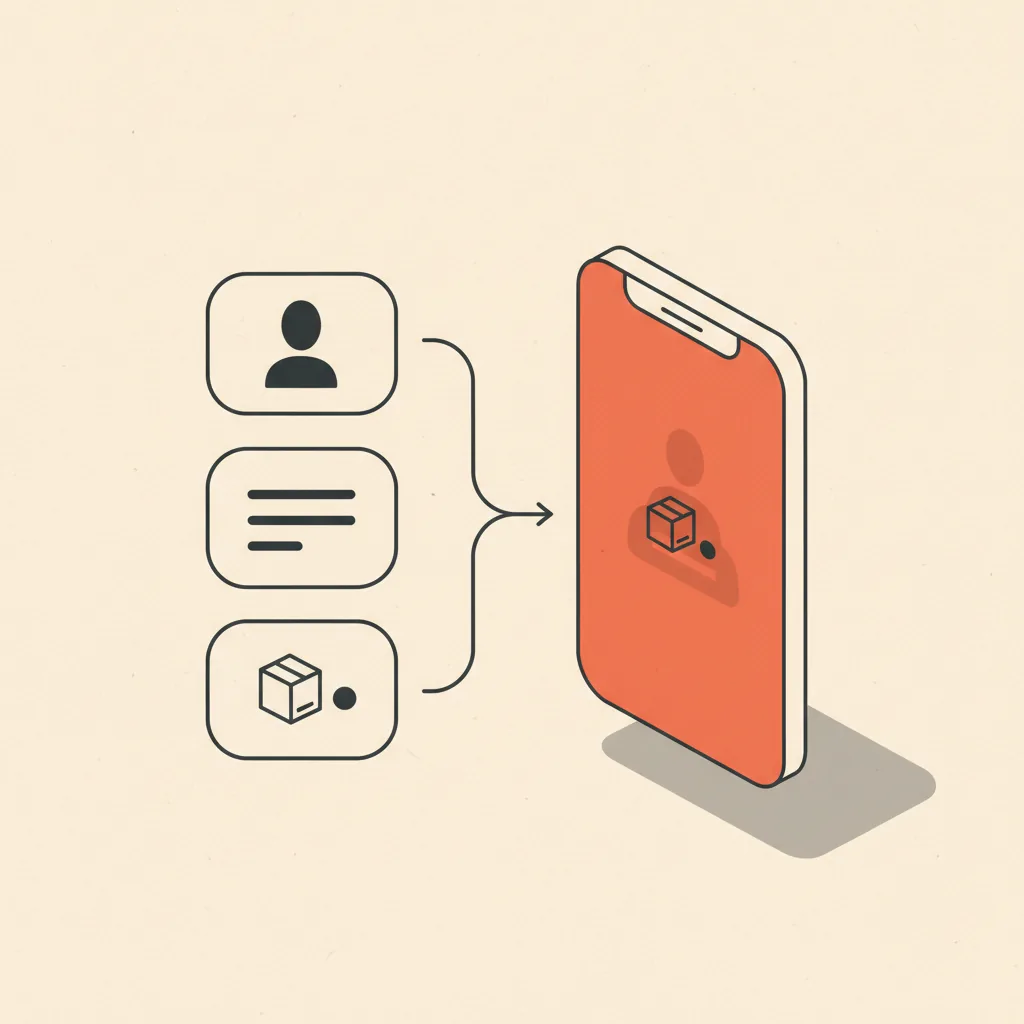
The production stack has three inputs and one output. Most platforms wrap them in a single dashboard, but the underlying pieces are the same.
- Avatar — picked from the platform library (200–700 stock creators on Arcads, MakeUGC, Creatify) or trained from a few minutes of footage of a real person whose likeness rights you own. Custom avatars cost $20–$200 to train and unlock voice cloning.
- Script — written by you, by a built-in AI script tool, or pulled from a winning ad you want to remix. Most platforms expect a 60–150 word script per 30-second video. Hook in the first 8 words; CTA in the last 8.
- Brand lock — the product reference (image, 3D model, or short clip) the avatar holds, the colors and logo overlays, the voice tone, the call-to-action card. This is the layer that determines whether the output looks like your brand or a generic AI-slop ad.
The platform stitches those three inputs into a finished render in 60–180 seconds per clip. Most teams generate 5–20 variants per script (different avatars, different hook reads, different B-roll cuts) and let the ad platform decide which one performs.
The leading AI UGC platforms in 2026
All of these platforms ship the same core feature: avatar plus script plus render. The differences that matter once you are running one in production come down to avatar library depth, lip-sync fidelity on long scripts, and how much brand-lock control the platform gives you.
| Platform | Avatar library | Custom avatar | Best for |
|---|---|---|---|
| Arcads | 500+ licensed stock creators | Yes ($49–$199 one-time) | Direct-response ad creative; strongest creator vibe |
| Creatify | 700+ creators + product-shot mode | Yes | High-volume variant testing; widest aspect-ratio support |
| MakeUGC | 200+ creators | Yes | Reference-ad cloning workflow ("redo this winning ad with my product") |
| HeyGen Avatars | 300+ avatars + 175 languages | Yes ($24–$72/mo, lifelike) | Multi-language localization; corporate explainer crossover |
| Higgsfield UGC | ~150 creators + cinematic motion | Yes | Higher-production "creator-y" content with stronger camera movement |
| Bandy.ai | ~80 creators (free tier) | Limited | Free entry point for testing the format before committing |
Picking the right one is a 30-minute test, not a research project. Spend $20 on each of two platforms with the same script and same product, generate 5 variants on each, and look at the output. The platform whose lip-sync holds up on your script wins. Everything else is marketing.
What AI UGC actually costs vs human UGC
The headline numbers are clear, but the real story is what each dollar buys in iteration room.
| Dimension | AI UGC | Human UGC creator | Boutique UGC agency |
|---|---|---|---|
| Cost per finished 30s video | $1–$5 | $50–$300 | $200–$500 |
| Time to first cut | 5–15 min | 5–10 days | 2–4 weeks |
| Variants per brief | 20–100 | 1–3 | 1–2 |
| Revisions cost | $0 (regenerate) | $50–$150 | $150–$300 |
| Authenticity ceiling | High but capped | Highest (real person) | High (real person) |
| Localization (per language) | $0 (re-render) | Re-shoot required | Re-shoot required |
The obvious conclusion from this table is to kill the human UGC budget entirely and move everything to AI. That backfires on most accounts within a quarter. Keep one or two trusted human creators for the hero spots that carry brand trust, and use AI UGC as the volume layer underneath. The routing pattern is below.
When AI UGC works (and when it does not)
Three years of platform data shows AI UGC outperforms human UGC on some ad shapes and underperforms on others. The line is mostly about how much trust the viewer needs to extend to the creator.
Where AI UGC wins
- Hook-heavy direct-response ads — the first 3 seconds of a Meta ad carry 80% of the attention. AI variants let you test 50 hook reads against the same script body in a week. Human UGC cannot keep up.
- B-roll and contextual cutaways — secondary shots inside a longer ad where the avatar is not the focus. Cheap, fast, and indistinguishable at 1.5x scroll speed.
- Localization — the same ad in 12 languages, same avatar, same brand voice, no re-shoot. This is where AI UGC pays for itself before iteration math even kicks in.
- Concept-test creative — before you commit a real creator to a 60-day campaign, generate 30 AI variants and let the ad platform tell you which angle is working.
Where human UGC still wins
- Brand-trust hero ads — the spot you run on a launch week, where the creator is half the conversion lift. Real people, real names, real follower counts. AI cannot fake follower count.
- Long-form review content — anything beyond 60 seconds where the avatar has to sustain personality. AI lip-sync drift becomes obvious past a minute.
- High-stakes regulated categories — health, finance, supplements. The "this is a real person who actually used the product" signal is part of what keeps the ad approved and the brand out of legal trouble.
The pattern that lands on real client budgets: 80% AI UGC for the variant layer, 20% human UGC for the hero spots. The same pattern we use for video API routing — see cheapest AI video generation API in 2026 — applies to creator selection.
Is AI UGC free?
Most platforms have a free tier. Bandy.ai gives you a few generations per month at no cost. Creatify and HeyGen run free trials with watermarks. Arcads and MakeUGC are paid-only but start around $30–$50 a month for entry tiers.
For ad-creative work, budget $50–$300 a month per platform you are seriously testing. Free tiers are useful for the "what does the output actually look like" question before committing, but no real ad workload runs on a free plan. Watermarks alone disqualify the output from Meta and TikTok ad libraries.
The cost-per-video math wins even on the paid plans. A $99-a-month Arcads tier that generates 100 finished videos works out to roughly $1 per clip, which is what shifts the math against $175 human UGC.
What the "30% rule" actually refers to
There is no canonical "30% rule" in AI UGC. The phrase floats around operator content on TikTok and YouTube, used loosely to mean different things — usually whoever uses it has not pinned down which one they mean. The interpretations worth knowing:
- 30% of variants outperform the control — this is the iteration-testing heuristic. If you generate 30 AI variants of the same ad concept, expect roughly 8–10 of them to beat your current best ad. This is why volume is the lever, not per-variant quality.
- 30% script lift threshold — some operators only ship AI variants whose predicted CTR (from internal scoring or platform copy tests) is at least 30% above the rolling average. Below that, regenerate.
- 30% AI / 70% real footage — a hybrid editing pattern where the talking-head sections are AI but the product shots, lifestyle B-roll, and on-location footage are real. Reads as more authentic than fully-AI output and tends to clear ad approvals more reliably.
If someone tells you "the 30% rule says X" without specifying which interpretation, they are repeating something they heard on a podcast. Push back and ask which one they mean.
How AI UGC fits in a real ad creative engine
Standalone AI UGC is a tactic. The full creative engine is what compounds — and most teams who treat AI UGC as a one-tool fix instead of a layer in a stack burn out their accounts in 60 days.
The shape we run for clients on our AI Creative service:
- Brief generation layer — an LLM that pulls winning ads from your account history and your competitors and proposes 5–10 new angles per week.
- Variant generation layer — AI UGC platforms (Arcads + Creatify) plus an AI image generator for static creative. 50–100 variants per week.
- Brand-lock layer — a small Sanity / Notion library of approved scripts, avatars, product references, and voice tones that every variant has to inherit.
- Routing and tagging — an n8n or Zapier workflow that pushes variants into Meta and TikTok with consistent UTM and creative-tag taxonomy.
- Performance feedback — weekly readout that feeds the next brief generation pass. The system gets smarter the longer it runs.
Without the brief layer above and the feedback layer below, AI UGC just generates a lot of mediocre ads quickly. With them, you get a self-improving creative engine that costs roughly what one human creator used to.
Where AI UGC is heading next
A few patterns worth tracking through the rest of 2026:
- Lip-sync drift on long scripts is closing fast. Arcads and HeyGen both shipped sub-50ms drift in Q1 2026; the 60-second-plus ceiling is moving to 3-minute-plus by year-end.
- Custom-avatar pricing is dropping. Training a custom avatar was $200 a year ago and is $20–$50 now. Most brands will train their own founder or one of their real creators rather than rent stock avatars.
- Ad platform detection is improving. Meta and TikTok both started flagging "synthetic media" in late 2025; expect mandatory AI disclosure tags by mid-2026. The pattern that survives is the 30/70 hybrid (AI talking head + real B-roll), not pure-AI output.
The category is shifting from "novelty tool" to "default ad-creative layer" in roughly the same arc that programmatic ad buying took 10 years ago. By the end of 2026, brands without an AI UGC layer in their creative stack will be paying 4–6x what their competitors pay for the same volume of ad variants.