Intercom Fin charges $0.99 per autonomous resolution. A human tier-1 support agent costs $25 to $45 per resolution depending on tier, volume, and country. The 25 to 45x cost gap is real and well-documented; it is the headline that gets AI support tools onto the next quarterly budget review. The catch is that the gap only closes when the deflection rate — the share of incoming tickets the agent actually resolves without a human — clears around 35%. Below 25%, the salaried rep is cheaper. Below 15%, Fin is meaningfully more expensive than a junior offshore tier-1 team. The pricing-page math and the operating-account math are different conversations.
This post compares the six picks that show up on real client invoices in April 2026: Intercom Fin, Zendesk AI / Answer Bot, Help Scout AI, Ada, Forethought, and a custom Claude or GPT support layer. Numbers come from active client billing across SaaS, ecommerce, and B2B accounts, plus a parallel test where the same 500-ticket sample got routed through three of these in a controlled pilot. The conversion target if any of this is interesting is our AI Stack Audit. This sits inside the cluster anchored by how to use AI for business operations — customer support is one of the six operator surfaces that compounds.
The short list
Six picks cover the realistic decision surface. Three are best-in-class for a specific shape; three are situational.
| Tool | Best for | Pricing model | Verdict |
|---|---|---|---|
| Intercom Fin | Autonomous tier-1 resolution at scale | $0.99 per resolution | Best autonomous agent in production; pay only for closes |
| Zendesk AI | Teams already on Zendesk Suite | $50/agent/mo add-on | Deepest Zendesk integration; weaker autonomy than Fin |
| Help Scout AI | SMB SaaS under 5k tickets/mo | $25–$65/user/mo | Best dollar-per-resolved-ticket below mid-volume |
| Ada | Enterprise B2C, high ticket volume | ~$15k+/year | Strong conversational layer; weaker for B2B |
| Forethought | Enterprise B2B SaaS support ops | ~$1k+/mo per agent | Triage and assist focus; not pure autonomous resolution |
| Custom Claude / GPT layer | Teams with engineering capacity | $50–$300/mo API cost | Most flexible; highest playbook control |
What AI customer support tools actually do
Strip the marketing layer off and the category does four things. Most tools do all four; what differs is which one they execute autonomously vs assist a human on.
- Triage — classify the incoming ticket by intent (refund, bug report, billing question, churn risk, abuse), urgency, and whether the customer has been routed before. The cheapest layer; nearly every tool in this category does it.
- Draft — write a suggested reply for a human to review and send. The most common shipping mode in 2026 because it is recoverable: a bad draft does not go out.
- Autonomous resolution — close the ticket without a human touching it. Fin's headline mode; Zendesk and Help Scout both ship limited versions. The mode that actually moves cost-per-resolution numbers, and the mode with the highest blast radius when it goes wrong.
- Escalation routing — decide which human should handle the ticket if it cannot be resolved by AI: tier-1, tier-2, account manager, billing specialist, founder. Underrated; gets you most of the operating leverage of autonomous resolution with a fraction of the risk.
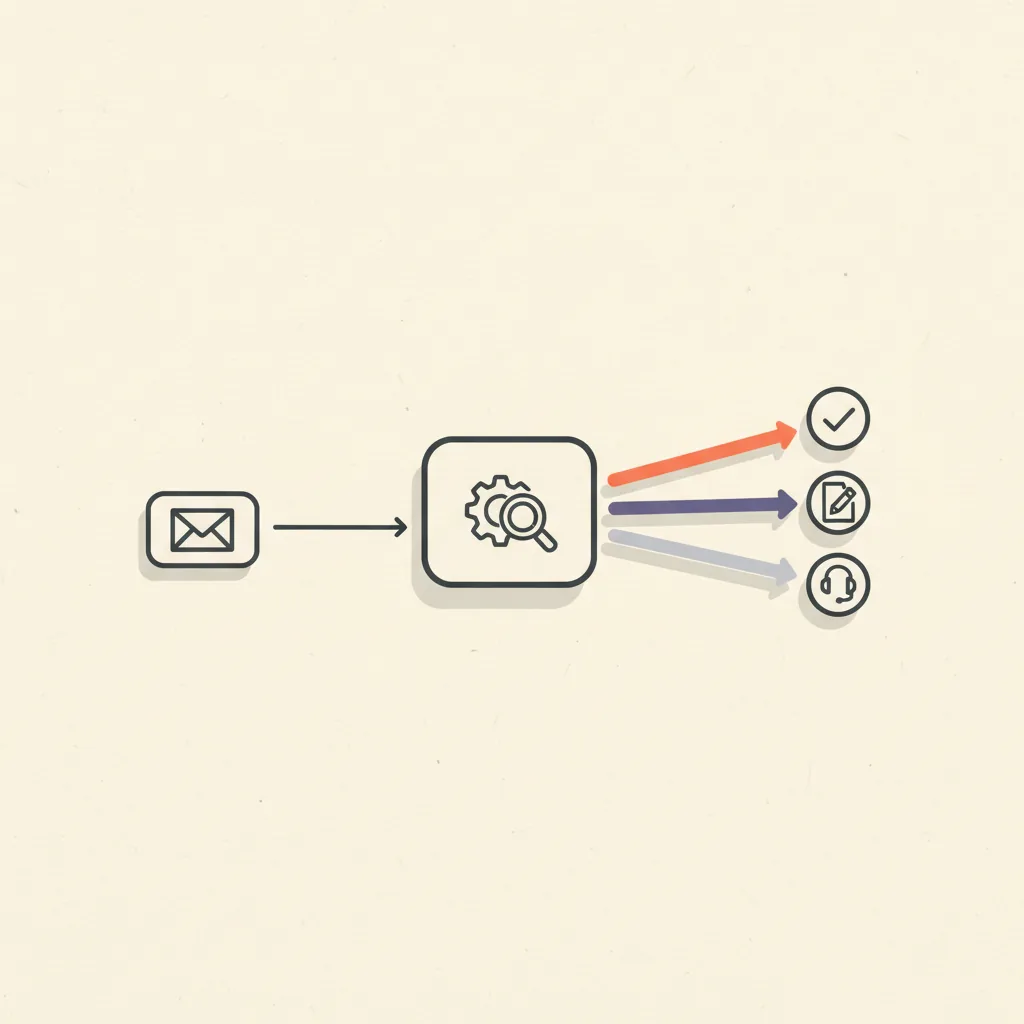
The shape is universal. The economics of each branch are not. Autonomous resolution is the only branch that actually replaces a human cost; the other three reduce time-per-ticket but still consume agent attention. A platform that deflects 5% of tickets autonomously and drafts the other 95% is not the same product as one that deflects 40% — even if the marketing pages look identical.
Per-tool deep dive
Intercom Fin — the autonomous-resolution leader
Fin is the only tool in this category where pricing genuinely aligns with outcomes. $0.99 per autonomous resolution; if the agent escalates or the customer drops off, you pay nothing. The model has measurably improved across 2025 — Intercom's public benchmark numbers put resolution rate above 50% on well-documented knowledge bases, and our own client data lands between 32% and 48% depending on product complexity. Pre-built integrations with Intercom's ticketing, knowledge base, and customer-data platform mean setup is genuinely under a week for teams already on Intercom.
The trade-off is ecosystem lock. Fin runs inside Intercom. If you are on Zendesk, Help Scout, or Front, switching to Intercom to use Fin is a months-long migration with real opportunity cost. The other live constraint is knowledge-base quality: Fin's resolution rate tracks closely with how well-documented your product is. Teams with thin or stale help docs see deflection rates below 20%, and the $0.99 model assumes the common case is well-documented. Plan to spend the first 30 days improving the knowledge base, not configuring the bot.
Zendesk AI / Answer Bot — the bundled default
Zendesk Suite costs $55 to $115 per agent per month depending on tier; Zendesk AI is a $50/agent/mo add-on on top. For a 10-agent team on the Professional tier that is roughly $1,800 a month for the helpdesk plus AI layer. The AI itself does triage, intent detection, suggested replies, and a constrained autonomous-resolution mode through the Answer Bot widget. The integration is the deepest in the category — Zendesk AI sees every ticket, every macro, every customer record, and every previous touch.
Where it falls short relative to Fin: autonomous resolution rate is meaningfully lower in head-to-head pilots, and the pricing model charges per agent rather than per outcome, so you pay the same whether deflection is 10% or 40%. The Zendesk pick is the right one when migration cost away from Zendesk exceeds the marginal lift Fin would deliver — which for any team with five-plus years of Zendesk macros and three-plus integrations is most teams. Inertia is real and not always wrong.
Help Scout AI — the SMB SaaS sweet spot
Help Scout starts at $25/user/mo on Standard, $50/mo on Plus, and $65/mo on Pro, with the AI features bundled into Plus and above. The shape is closer to Zendesk than Intercom — shared inbox, conversation threading, knowledge-base integration — but the price point and the ergonomics target SMB SaaS rather than enterprise. AI features include draft replies, auto-categorization, conversation summarization, and a limited Beacon-widget self-serve resolution layer.
Help Scout is the right pick when ticket volume is under roughly 5,000 a month, the team is under 15 agents, and the playbook value is in time-saved-per-agent rather than autonomous deflection. On the math: a 5-agent Help Scout Plus team runs $250/mo total, and AI draft replies typically cut average handle time by 20 to 35% on tier-1 tickets — that is the equivalent of 1 to 1.5 freed agent seats at a fraction of Fin's scaled cost. Above 5,000 tickets a month or 15 agents, Fin or Zendesk AI start to win on absolute economics.
Ada — enterprise conversational AI
Ada is enterprise from the first call. Pricing starts around $15,000/year and scales with conversation volume; mid-market and large enterprise contracts run six figures annually. The platform focuses on conversational AI for B2C support — telecom, retail, fintech, travel — where ticket volumes are very high (hundreds of thousands a month) and the cost calculus is dominated by autonomous-resolution rate at scale. Ada's strength is the conversational layer: multi-turn dialogues that stay coherent, branching into different resolution paths, handling identity verification and account-context lookups inline.
Where it falls short: setup is heavyweight (8 to 12 weeks is typical), and the platform is overkill for B2B SaaS support where conversations are fewer but more nuanced. Ada is a vendor decision; it is not a bolt-on. The right pick for a 200-agent contact center; the wrong pick for a 10-agent SaaS support team.
Forethought — enterprise triage and assist
Forethought sits closer to the assist end of the spectrum than the autonomous end. The core products — Solve, Triage, and Assist — focus on automating ticket classification, routing, and reply suggestions for human agents rather than closing tickets without human touch. Pricing is enterprise, roughly $1,000+/mo per agent on typical contracts, and the integration is deepest with Salesforce Service Cloud and Zendesk.
Forethought is the right pick for B2B SaaS support orgs where ticket complexity rules out high autonomous-resolution rates but where AI-assisted triage and reply drafting can compress average handle time by 30 to 50% on tier-1 and tier-2 work. It is the wrong pick if you are buying primarily for cost-per-resolution savings; the model assumes humans stay in the loop on most tickets.
Custom Claude or GPT support layer — the DIY pick
A surprising number of teams in 2026 run a custom support agent built on Claude or GPT-4-class models, plumbed into their helpdesk via API or webhook, with the playbook encoded in code rather than a SaaS UI. Cost runs $50 to $300/mo in API spend depending on volume, plus engineering time to build and maintain. The architecture is the same five-step ops loop covered in our how to use AI for business operations piece: trigger (ticket arrives), context (pull customer data, ticket history, knowledge base), decide (Claude reasons given the playbook), act (draft reply, route, or autonomously resolve), log (feedback layer).
When it wins: when you have unusual data shape (custom CRM, non-standard helpdesk, regulated data residency requirements), when the playbook is too specific for off-the-shelf tools to capture, or when you want full visibility into what the agent decided and why. When it loses: when the team has no engineering capacity, when ticket volume is so high that maintenance cost exceeds Fin's $0.99/resolution math, or when compliance requirements need a vendor with SOC 2 / HIPAA certification rather than a homegrown stack. We ship custom builds for clients in the first category as part of our custom builds engagement.
Pricing comparison
The six picks span four different pricing models: per-resolution (Fin), per-agent SaaS (Zendesk, Help Scout, Forethought), enterprise contract (Ada), and metered API (custom). Comparing them on a single chart requires picking a reference point — say, 1,000 incoming tickets a month with 10 support agents.
| Tool | Entry tier | Pricing basis | What scales the bill |
|---|---|---|---|
| Intercom Fin | $0.99/resolution | Per autonomous resolution | Resolution count |
| Zendesk AI | $50/agent/mo | Per agent (add-on) | Agent headcount |
| Help Scout | $25–$65/user/mo | Per user, AI in Plus+ | User headcount |
| Ada | ~$15k+/year | Enterprise contract | Conversation volume |
| Forethought | ~$1k+/mo per agent | Enterprise per-agent | Agent headcount |
| Custom Claude | $50–$300/mo API | Per token consumed | Ticket volume × prompt size |
Deflection rate is the metric that decides everything
Every other number in the AI support conversation is downstream of deflection rate — the percentage of incoming tickets the agent resolves without human touch. Below 25%, almost no AI support tool clears the salaried-rep cost bar. Above 45%, almost every model wins. Most of the actual decision happens in the 25 to 45% band where the pricing-model differences swing the answer.
The mechanics: at 30% deflection, Fin closes 30% of tickets at $0.99 each; humans close the other 70% at roughly $25 each. The blended cost is (0.3 × $0.99) + (0.7 × $25) = $17.80 per resolved ticket. At 50% deflection that drops to $13.00. At 60% it drops to $10.60. The non-linear lever is deflection itself — knowledge-base quality, intent-classification accuracy, and the willingness to let the agent attempt resolution on more ticket types.
The other lever is what counts as a resolution. Some teams set the bar at "ticket closed without human touch and customer did not re-open"; others set it at "AI drafted a reply, customer responded positively, ticket auto-closed after 48 hours". The looser definition inflates the deflection number but degrades quality; the tighter definition is honest but produces lower headline rates. Pick the definition before reading anyone's case study claims.
When to pick which by team and business shape
Six picks, six shapes. The right answer is rarely the same across two different companies even when the surface looks similar.
| Team shape | Best pick | Second pick | Why |
|---|---|---|---|
| Already on Intercom, 5k+ tickets/mo | Intercom Fin | Custom Claude | Fin's autonomous-resolution math wins above ~5k tickets/mo on a well-documented product |
| Already on Zendesk, 10+ agents | Zendesk AI | Forethought | Migration cost from Zendesk exceeds Fin's marginal lift for established teams |
| SMB SaaS, 5–15 agents, <5k tickets/mo | Help Scout Plus | Custom Claude | Best dollar-per-resolved-ticket at this scale; AI drafts cut handle time 20–35% |
| Enterprise B2C contact center | Ada | Forethought | Conversation-flow tooling and scale economics designed for high-volume B2C |
| Enterprise B2B SaaS support ops | Forethought | Custom Claude | Triage + assist matches B2B conversation complexity better than autonomous models |
| Custom CRM / regulated data | Custom Claude | Forethought | Off-the-shelf tools cannot capture unusual data shape or compliance constraints |
| Bootstrapped, <1k tickets/mo | Help Scout Standard | Custom Claude | AI features in Plus tier are nice-to-have; baseline helpdesk is the priority |
The cross-cutting rule: pick on ticket volume and helpdesk inertia first, pricing model second, AI feature richness last. Most teams over-weight the AI demo and under-weight whether the platform fits the rest of their stack.
Common failure modes
Patterns across audits of AI support projects that broke between week 6 and month 4:
- Over-aggressive auto-resolution — closing tickets the customer wanted escalated. The most expensive mistake; one bad close on a churn-risk account costs more than 100 successful deflections. Always preserve a human-escalation path on tickets flagged urgent, refund-related, or churn-risk regardless of how confident the AI is.
- Lost human escalation path — burying the "talk to a person" option three menus deep in the bot widget. Customers who feel trapped by AI become detractors at 4x the rate of customers who get handed to a human after one round of self-serve.
- Hallucinations on policy questions — the AI confidently quotes a refund policy or warranty term that does not exist in the actual policy. Mitigation: ground every policy answer in a citable knowledge-base article and refuse to answer when no citation is available. Most autonomous-resolution failures we audit are policy hallucinations, not technical bugs.
- Stale knowledge base — the agent keeps quoting a workflow that was deprecated three months ago. The fix is process, not technology: every product change ships with a knowledge-base update as a release-blocker, not a follow-up task.
- No measurement layer — running the AI without tracking deflection rate, escalation rate, CSAT delta, and re-open rate weekly. You cannot improve what you do not measure, and you cannot defend the project to the next budget review without the numbers.
- Skipping the trust-graduation step — flipping the agent from "drafts and waits" to "autonomously resolves" before measuring its baseline error rate on a controlled sample. Same failure pattern that breaks every other ops AI project; covered in detail in what is an AI agent.
On compliance: AI customer support in regulated industries (healthcare, finance, legal) needs explicit audit trails, role-based access on customer-data lookups, and a documented human-review checkpoint on any conversation that touches PHI, financial records, or legal advice. Generic tools underperform here; either pick a vendor with vertical certifications (Forethought has the strongest compliance posture in the comparison set) or build custom with the audit layer baked in.
Where this is heading
Trends through the rest of 2026 and into 2027 worth tracking:
- Resolution-based pricing becomes the default. Fin's $0.99 model is inverting the category — Zendesk AI and Help Scout both shipped early per-resolution tiers in Q1 2026, and Ada is rumored to be testing one for mid-market. Per-agent pricing on AI add-ons is dying because it does not align vendor incentive with customer outcome.
- Voice support gets autonomous. Text-channel autonomous resolution is mature; voice has lagged because of latency and conversational-flow constraints. New low-latency speech models from OpenAI, Anthropic, and ElevenLabs are closing that gap; expect production-grade autonomous voice support agents on tier-1 inquiries by mid-2027.
- Cross-surface support agents emerge. Today the support agent only sees support tickets. The next-generation agent sees the customer's full account state — billing, product usage, sales pipeline notes, previous tickets across channels — and decides what to do given that fuller picture. Companies running it well in 2027 will deflect 60%+ on B2B SaaS support, not 35%.
- Compliance-grade vertical specialists win regulated segments. Generic AI support will continue to underperform in healthcare and finance; vendors specifically certified for HIPAA, SOC 2 Type II, and FINRA workflows will own those segments because the integration cost of generic tools is higher than the price premium of specialists.
The pattern across all four: the cost-per-resolution number keeps falling, but the ceiling on how much support you can autonomously resolve keeps rising. Two years from now the conversation will not be "should we use AI for support" — it will be "what does the human support team that survives look like, and what work do they do that AI cannot". Senior escalation, judgment-heavy retention conversations, and edge-case investigation. The AI sets the table; humans handle the things that matter.
We build and audit AI support stacks for clients as part of our AI Stack Audit and process automation engagements. The full setup pays for itself within 90 days for any team handling more than 1,500 tickets a month where deflection rate is currently below 30%. See how to use AI for business operations for the broader operator-side AI map this fits inside, what is an AI agent for the underlying agent architecture, and HubSpot vs Salesforce for the CRM choice that sits next to the support tool decision.