
Every "best AI video ad generator" guide on Google ranks tools by feature count. The actual filter operators apply after a first 30-day test is much narrower: which of these can a junior marketer run 50 variants through in a week without engineering supervision. Three platforms clear it. The rest are demos disguised as products, which is why every SERP listicle reads like a feature-spec data dump and none of them tells you which one to actually buy.
The picks below are based on active client billing across DTC, app, and agency accounts in mid-April 2026, plus a parallel test where the same product brief got run through every platform on the SERP front page. The verdicts focus on production survival, not headline feature counts.
The actual short list
Three platforms clear the production-volume bar. The rest sit below it for reasons covered later.
| Platform | Best for | Pricing | Verdict |
|---|---|---|---|
| Arcads | Direct-response ad creative | $110–$210/mo | Strongest creator vibe; the default pick for performance ads |
| Creatify | High-volume variant testing | $39–$359/mo | Best when iteration count matters more than per-video polish |
| MakeUGC | Reference-ad cloning | $89–$199/mo | The "remix this winning ad" workflow nobody else nails |
| Higgsfield UGC | Cinematic motion / one-off hero spots | $15–$60/mo | Beautiful output, weak production workflow |
| InVideo | Hobbyist / SMB self-serve | $25–$60/mo | Templates, not testing — wrong shape for ad accounts |
| Quickads / Zeely | Casual one-off ads | $29–$99/mo | Demos disguised as products |
What "production survival" actually means
A platform survives production when a non-technical team member can: write 10 scripts in a sitting, generate 5 variants per script across 3 avatars, drop the output into Meta Ads Manager with consistent UTM tagging, and do it again next week. That is roughly 150 finished videos a month. Most platforms break somewhere in that loop — usually at batch generation, lip-sync drift past 30 seconds, or aspect-ratio coverage when Meta needs both 9:16 and 1:1 cuts.
- Arcads clears the loop because the avatar library and lip-sync hold up at 60-second scripts and the dashboard handles bulk script upload natively.
- Creatify clears it because batch generation is built in (up to 50 variants per run) and aspect-ratio coverage is the widest in the field.
- MakeUGC clears it because the reference-ad cloning workflow lets a junior marketer pick a winning ad from competitor accounts and produce a structurally similar variant without writing a script from scratch.
Below those three, the workflow breaks at the second or third step. That is the entire ranking story; the rest of the comparison is detail on which of the three to start with.
Per-platform deep dive
Arcads — the default pick for performance ads
Arcads ships the cleanest creator-style output of any AI UGC platform in April 2026. The 500-plus stock avatar library is licensed, the lip-sync holds up to 60-second scripts without visible drift, and the avatars actually look like people who could exist on TikTok. Custom-avatar training runs $49 to $199 as a one-time fee.
Where it falls short: brand-lock controls are weaker than Creatify. There is no native palette enforcement, and the product-shot integration is basic — most teams hand-edit product cuts in DaVinci or CapCut after generation. Pricing starts at $110 a month for the entry tier and runs $210 for the pro tier with extended commercial usage and team seats.
Creatify — when iteration count matters most
Creatify is the volume play. The 700-plus avatar library is wider than Arcads, the batch-generation feature does up to 50 variants in one run, and aspect-ratio coverage spans 9:16, 1:1, 4:5, and 16:9 natively. It also includes a product-shot mode that handles e-commerce visuals more cleanly than Arcads.
The trade-off is that the lower-tier avatars look noticeably more "AI" than Arcads. Output below the $89 a month tier is acceptable for variant testing but not for hero spots. Pricing ranges from $39 (basic, watermarked) to $359 (enterprise, unlimited) depending on volume. The $89 to $189 range is where most real teams live.
MakeUGC — the reference-ad cloning workflow
MakeUGC differentiates on a single workflow: upload a competitor ad you wish you had run, the platform analyzes its structure, pacing, and shot sequence, then generates a variant with your avatar and your product. This is uniquely useful when a winning ad shows up in the Meta Ads Library and you want a structurally similar version without reverse-engineering the script from scratch.
The avatar library is smaller than Arcads or Creatify (~200 creators), but the cloning workflow makes up the gap for teams that work from competitor research. Pricing runs $89 a month at the entry tier and $199 a month at the pro tier.
Higgsfield UGC, InVideo, Quickads, Zeely
All four ship real product. Higgsfield has the strongest cinematic motion of any UGC platform in 2026, but the dashboard is built for one-off hero shots, not batch testing. InVideo is the SMB self-serve play with templates and a 50-language library, but the output reads as templated — fine for a small business launching a single ad, wrong shape for an ad account testing dozens of variants. Quickads and Zeely are early-stage products with limited workflow tooling. None of them clears the production-volume bar yet.
Pricing comparison
All five production platforms are subscription-based; the per-video math depends on how much you generate.
| Platform | Entry tier | Mid tier | Top tier | Videos included |
|---|---|---|---|---|
| Arcads | $110/mo | $110/mo | $210/mo | ~100–500/mo |
| Creatify | $39/mo | $89/mo | $359/mo | ~50–unlimited |
| MakeUGC | $89/mo | $149/mo | $199/mo | ~80–400/mo |
| Higgsfield UGC | $15/mo | $45/mo | $60/mo | ~30–200/mo |
| InVideo | $25/mo | $45/mo | $60/mo | Unlimited (templates) |
What $99 a month buys
Same dollar across the three production-grade platforms produces different volume:
Creatify wins on raw volume at the same dollar; Arcads wins on per-video quality; MakeUGC wins when each variant has to start from a real competitor reference.
Feature matrix: which one wins on what
| Capability | Arcads | Creatify | MakeUGC | Higgsfield | InVideo |
|---|---|---|---|---|---|
| Avatar library size | 500+ | 700+ | 200+ | 150 | Stock actors |
| Custom avatar training | $49–$199 (one-time) | Yes | Yes | Yes | No |
| Lip-sync ceiling | ~60s scripts | ~45s scripts | ~45s scripts | ~30s scripts | ~30s scripts |
| Batch generation | ~10 at once | ~50 at once | ~10 at once | No | No |
| Aspect-ratio coverage | 9:16, 1:1 | 9:16, 1:1, 4:5, 16:9 | 9:16, 1:1 | 9:16 | 9:16, 16:9 |
| Reference-ad cloning | No | Limited | Yes (core feature) | No | No |
| Product-shot integration | Basic | Strong | Basic | Limited | Templates only |
| Brand-lock controls | Weak | Strong | Medium | Weak | Templates only |
| API / programmatic access | Limited | Yes | Limited | No | No |
| Meta / TikTok ad library compatibility | Yes | Yes | Yes | Yes (with edit) | Yes (with edit) |
The routing pattern most teams settle on
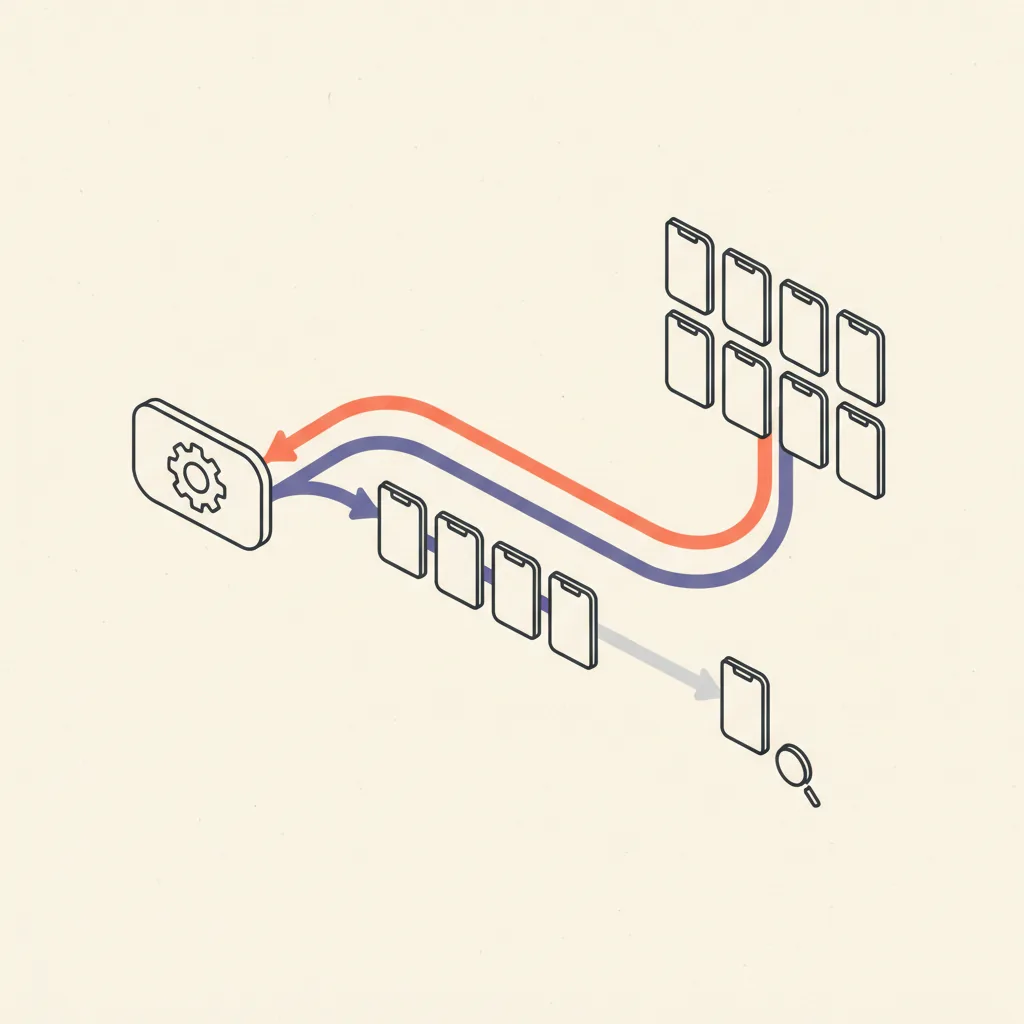
After a 30 to 60-day test cycle, most ad-creative teams converge on a similar split. Pick a workhorse for the bulk of work, add a specialty platform for the cases the workhorse cannot handle.
| Workload | Workhorse | Specialty / hero | Volume split |
|---|---|---|---|
| DTC performance ads | Arcads | Creatify (variant testing) | 70 / 30 |
| App-install campaigns | Creatify | Arcads (hero spots) | 60 / 40 |
| Agency client work (multiple brands) | Arcads | MakeUGC (competitor cloning) | 70 / 30 |
| Cross-language localization | Creatify | InVideo (50+ language coverage) | 70 / 30 |
| Single-brand DTC, low volume | Arcads | — (one platform is enough) | 100 / 0 |
On a typical $200 to $400 a month ad-creative tooling bill, this routing pattern produces 200 to 400 finished video variants a month — the volume that actually wins ad-account testing. See what is AI UGC for the upstream framing on how AI UGC fits in a paid creative engine.
Where each platform falls short
No platform is universally the right pick, and the failure modes matter as much as the wins.
- Arcads — weak brand-lock, basic product-shot integration, no batch generation past about 10 at a time. Fine for single-brand DTC, painful for agencies running 5+ brand kits.
- Creatify — lower-tier avatars look noticeably AI; the $89 plan is the floor for output that ships to ad accounts. Per-video polish trails Arcads.
- MakeUGC — smaller avatar library limits what kinds of creators you can use. Competitor cloning is the differentiator; without that workflow it is the third pick.
- Higgsfield UGC — built for hero shots, not batch testing. Cinematic motion is best in class but production workflow is missing.
- InVideo — templates, not avatars. Output reads as templated to anyone scrolling Meta or TikTok. Wrong shape for performance creative.
How to test all three without committing
A reasonable trial path that keeps the tooling bill under $300 for the test month:
- Pick one product and one brief — the same brief has to run through all three platforms or the test is useless. Three minutes of avatar selection, the same 90-word script, the same product reference.
- Spend $89 each on Arcads, Creatify, MakeUGC entry tiers — about $267 for the test month. Generate 10 variants per platform.
- Push all 30 to Meta Ads Manager and run a $300 test budget — same audience, same campaign objective, same bid strategy. Let the platform algorithm tell you which platform produced the winners.
- Lock the workhorse, drop the others — by week three the winner is usually obvious. Cancel the other subscriptions; keep one specialty platform if the routing pattern above applies.
We run this test pattern as part of our AI Creative engagement. The setup pays for itself in week two for any team spending $5k+ a month on Meta or TikTok ad creative.
Where this is heading
A few patterns worth tracking through 2026:
- Avatar libraries are growing roughly 30% a quarter across all platforms. The "I cannot find an avatar that fits my brand" complaint is going away.
- Custom-avatar training pricing is collapsing. By mid-2027 most brands will train their founder or an existing creator they already work with rather than rent stock avatars.
- Reference-ad cloning is becoming table stakes. MakeUGC has the lead, but Arcads and Creatify both shipped early versions in Q1 2026; expect parity by year-end.
- Meta and TikTok started flagging synthetic media in late 2025. Hybrid output (AI talking head plus real product shots and B-roll) is what is clearing approvals; pure-AI output is where the rejections cluster.
Two years ago this comparison would have been a list of curiosities. Today it is the difference between an ad account that ships 200 variants a week and one that ships 12. The cost of being on the wrong side of that gap is what makes the platform pick worth taking seriously.