
Every operator landing on this question asks the same thing: AI SDR or human SDR. The framing itself produces the wrong answer. The teams that actually shipped pipeline in Q1 2026 are not picking one — they are layering AI on top of process redesign with humans handling the part of the funnel where humans still win. The right question is "AI SDR plus human plus qualification layer, or AI SDR alone" — and the second answer is what kills most pipelines inside 90 days.
Most "AI vs human SDR" content reads like a vendor pitch with the verdict baked in (Salesforce, Lyzr, Verse all sell into this category). The numbers below come from active client billing in late April 2026 — DTC, SaaS, and B2B services accounts running 1–12 SDR-equivalents. The post walks the capability split, the real cost-per-qualified-meeting math, the hybrid model, and a decision table for when each pick actually applies.
Why "AI vs human" is the wrong question
The binary framing assumes the SDR role is one job. It is not. A B2B SDR motion has at least four distinct sub-jobs: list building and enrichment, outbound at volume, inbound qualification and routing, and meeting handoff to an AE. AI is dramatically better than a human at jobs one through three at the volume end. Humans are still meaningfully better at job four and at the relationship layer underneath every conversation.
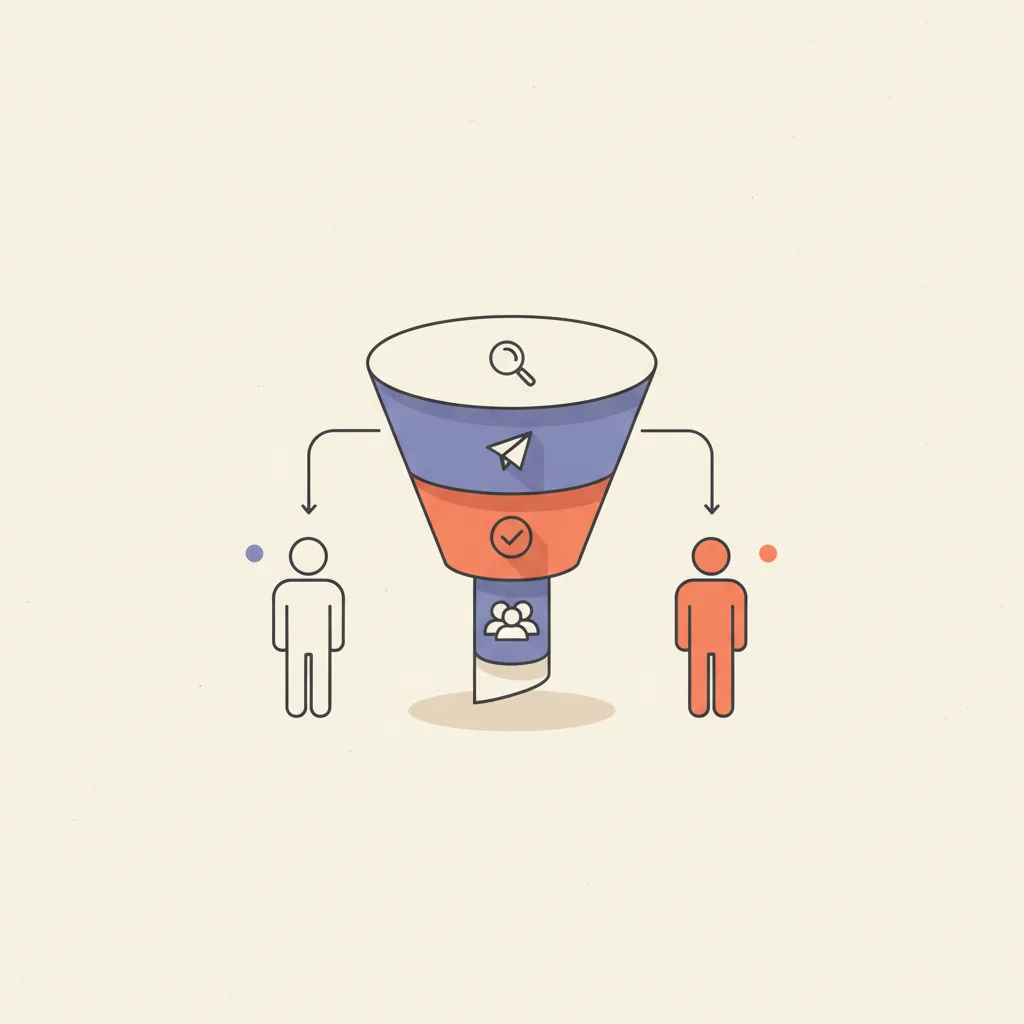
The hybrid architecture maps the layers cleanly:
- Layer 1 — Data + ICP detection — AI wins. Apollo, Clay, Common Room enrich faster and cheaper than any human researcher.
- Layer 2 — Outbound volume — AI wins on volume. Humans win on quality per touch. Tradeoff is real.
- Layer 3 — Qualification + routing — AI wins on speed and consistency. Default and custom Claude scripts produce a 2-paragraph AE brief in 60 seconds.
- Layer 4 — Qualified handoff + AE conversation — Humans still win. Complex objections, multi-stakeholder dynamics, brand voice on the call — AI is not there yet.
What AI SDRs actually do well
Specific capabilities where AI beats a junior human SDR in mid-2026:
- Volume — 1,000+ contacts a day vs 30–50 for a human. Not a marginal gap; a 20–30x gap.
- Response speed — under 1 minute on inbound vs 2–4 hours for a human. Inbound conversion is highly time-sensitive; this is where AI wins decisively.
- After-hours coverage — 24/7. A prospect who fills the form at 11pm gets a real reply at 11:01pm.
- Multi-language — instantly fluent in 50+ languages. A human team would need 5+ hires to cover the same surface.
- Data lookup and enrichment — pulls funding, headcount, tech stack, recent news in seconds. A human researcher takes 2–3 hours per account.
- Consistency — never has a bad day, never forgets the script, never loses a lead in the inbox.
- Cost per touch — $0.06 per email at volume vs $0.35 for a human-driven equivalent. The per-unit gap is the headline number every vendor leads with.
Where this lands cleanly: lead enrichment, top-of-funnel cold outreach when the script is repeatable, inbound auto-reply and routing, after-hours coverage, multi-language outreach, and pre-meeting brief generation. These are the surface areas where AI is not just cheaper than a human — it is structurally better.
What human SDRs still do better
The capabilities where a real human still beats every AI SDR product on the market in April 2026:
- Relationship-building on the call — the moment a prospect picks up the phone or jumps on a discovery, the AI advantage flips. Humans read tone, build rapport, and adapt mid-conversation in ways AI is still 2–3 years from matching reliably.
- Pattern recognition on weird leads — a prospect with an unusual title at a company that does not match the ICP rule but is clearly a buyer. Humans flag it; AI filters it out.
- Judgment calls on account approach — when to push, when to back off, when to multi-thread, when to wait for a fundraise to close. Pattern judgment from cross-deal experience.
- Brand voice nuance — AI-generated cold email at scale poisoned domain reputation in 2025 because the output reads as templated. A human SDR with a real voice still gets replies.
- Complex objection handling — pricing pushback, security review escalations, procurement gauntlets. AI cannot navigate these; humans can.
- Internal advocacy — getting the prospect to champion your deal internally. Requires trust built on the call. AI does not build trust at this layer yet.
The under-discussed point: 98% of execs in late 2025 still preferred a real conversation when the deal mattered, and 96% reported trusting brands more after a human touchpoint. Buyers are not ready for 100% AI reps in the high-trust segment of the funnel, and that segment is where most of the revenue lives. The replacement narrative ignores this and is wrong about it.
Cost comparison — the headline number, then the real number
Vendor decks lead with the per-unit cost gap. The per-unit number is real; the per-qualified-meeting number is what determines whether the math actually works.
| Cost component | Junior human SDR | Mid-level human SDR | AI SDR stack |
|---|---|---|---|
| Base salary | $50,000–$65,000 | $70,000–$90,000 | — |
| Commission / variable | $15,000–$25,000 | $20,000–$35,000 | — |
| Benefits + payroll tax | $12,000–$18,000 | $18,000–$25,000 | — |
| Tools per seat | $3,000–$8,000 | $4,000–$10,000 | — |
| Manager time / coaching | $8,000–$15,000 | $8,000–$15,000 | — |
| Platform license (11x, Regie, Artisan) | — | — | $18,000–$60,000 |
| Data enrichment | — | — | $3,000–$12,000 |
| Setup + ops | — | — | $2,000–$8,000 |
| Total annual | $87,000–$131,000 | $120,000–$175,000 | $23,000–$80,000 |
That is the headline number. Now the real number — cost per qualified meeting:
AI alone produces the most meetings and the worst per-qualified-meeting cost — because the qualified-meeting rate craters from ~45% (human) to ~12–18% (AI without a qualification layer). Human alone produces fewer meetings but holds qualified rate. Hybrid produces high volume AND holds qualified rate, which is why per-qualified-meeting cost lands lowest. This is the counterintuitive result every replacement narrative misses.
The hybrid model that wins
The setup most teams converge on after a 60–90 day pilot — and the one we install on client engagements:
- AI handles prospecting — Apollo or Clay enriches lists, custom Claude scripts score and rank.
- AI handles outbound at volume — Smartlead or Reply.io with rotating sender domains, AI-personalized first lines per row, plain-text formatting.
- AI handles inbound qualification + routing — Default or Calendly + custom Claude pre-meeting brief script. Sub-1-minute response time on form-fills, 2-paragraph brief on AE calendar before the call.
- AI handles after-hours coverage — 24/7 inbound auto-reply, meeting booking, FAQ handling.
- Human handles qualified discovery — once the meeting hits the AE calendar with a brief, the human takes over. AI summarizes and drafts follow-up; the human owns the conversation.
- Human handles complex objections — pricing, security, procurement, multi-stakeholder. AI flags signals; human makes calls.
- Human handles deals above a threshold — typically $25k+ ACV or 3+ stakeholders. Below that, AI handles end-to-end with human review.
Annual cost for a hybrid setup serving roughly the same pipeline as a 4-SDR human team: about $60,000 for one mid-level human + $24,000 for the AI stack = $84,000. A 4-human team costs $348,000 for the same pipeline. The hybrid is not just 75% cheaper — it is also producing more meetings (AI volume) AND holding qualified-meeting rate (human handoff layer). This is what compounds. See how to implement AI in your sales process for the full per-stage breakdown.
What each side does well
| Capability | AI SDR | Human SDR | Winner |
|---|---|---|---|
| Volume (contacts/day) | 1,000+ | 30–50 | AI |
| Response speed (inbound) | < 1 minute | 2–4 hours | AI |
| Working hours | 24/7 | 8–10 | AI |
| Multi-language coverage | 50+ instantly | 1–2 typical | AI |
| Data enrichment speed | Seconds | 2–3 hours/account | AI |
| Cost per touch | ~$0.06 | ~$0.35 | AI |
| Reply rate (cold) | 0.8–2.5% | 2–5% | Human |
| Qualified-meeting rate | 12–18% (no qual layer) | 40–55% | Human |
| Relationship-building on call | Weak | Strong | Human |
| Pattern recognition on weird leads | Filters them out | Flags them | Human |
| Brand voice nuance | Templated | Variable but real | Human |
| Complex objection handling | Cannot | Can | Human |
| Consistency / never-bad-day | Yes | No | AI |
When to pick which
Three real decision paths based on company stage, deal size, and ICP complexity:
| Situation | Pick | Why |
|---|---|---|
| SMB, low-touch product, $5k–$20k ACV | AI alone (with light human review) | Repeatable script, volume matters more than per-touch quality |
| Mid-market SaaS, $20k–$75k ACV | Hybrid | AI volume + human qualified handoff is the dominant strategy |
| Enterprise, $75k+ ACV, 3+ stakeholders | Human-led, AI-assisted | Deal complexity rewards human judgment; AI assists research and follow-up |
| Agency / services, $5k–$50k retainer | Hybrid | Trust-based motion; humans on the call, AI on the volume layer |
| Pre-seed, no ICP yet | Founder-led + AI | Founder takes calls, AI handles volume and lookups |
| High-volume SMB e-commerce | AI alone | Volume is the entire game; humans are too expensive per unit |
| Regulated industry (healthcare, fintech, legal) | Human-led | Compliance and trust requirements; AI for research only |
| Existing 4+ SDR team in mid-market | Hybrid (cut team in half, add AI) | Realistic transition path; preserves institutional knowledge |
The pattern that holds: the higher the deal size and the more complex the buying committee, the more leverage the human has. The lower the deal size and the more repeatable the motion, the more leverage the AI has. The middle — where most B2B revenue lives — is hybrid territory.
Replacement without redesign breaks the unit economics
The contrarian point most operators miss: replacing humans with AI without redesigning the qualification layer makes the unit economics worse, not better. The math:
- Before replacement — 4 SDRs at $87k each = $348k. 200 meetings/month, 45% qualified-and-show, 90 qualified meetings. Cost per qualified meeting: $322.
- After "replacement" without qualification layer — 1 AI stack at $24k/year. 2,000 meetings/month booked, 14% qualified-and-show, 280 qualified meetings. Cost per qualified meeting: $7. Looks great.
- After AE close-rate adjustment — qualified meetings have a different fit profile. Close rate drops from 22% to 9% because the AI-booked meetings are weaker. Closed deals: 25 vs 20 before. Per-deal CAC rises 40% because AE time per deal goes up.
- After AE burnout adjustment — AEs running 280 weak meetings instead of 90 strong ones quit within 6–9 months. Replacement AE cost + 3-month ramp + lost revenue = the entire savings disappear and then some.
The math only works when the AI replacement comes with a qualification layer that holds the qualified-meeting rate above ~35%. Without that layer, "replacement" produces worse unit economics inside two quarters. This is the failure mode most teams hit and why the hybrid model — AI + qualification + human — is what actually compounds. See what is an AI agent for the underlying agent architecture and what is GoHighLevel for the all-in-one platform that bundles a lot of this for SMB motions.
Where this is heading
Three shifts to watch through the rest of 2026:
- Autonomous AI SDR products are consolidating fast. The 11x / Regie / Artisan / Bosh category had ~30 entrants in early 2025; expect 4–6 survivors by end of 2026 as deliverability problems and qualified-meeting-rate transparency force differentiation.
- Qualification-layer tooling becomes the dominant category. Default and the next wave of "AI between form-fill and AE calendar" products are quietly winning the leverage war while the noise is on replacement narratives.
- The senior AE role is gaining pricing power, not losing it. As the top of the funnel automates, the human handoff at the qualified-meeting layer becomes the rate-limiter for revenue. Senior AE compensation is up ~12–18% YoY in B2B SaaS.
The replacement framing — fewer humans, more autonomy, lower spend — is the conversation everyone is having. The work that compounds is at a different layer: redesign qualification, layer AI on volume, keep humans on the qualified handoff and complex deals. Replacement is a tactical move on a single line item; the hybrid architecture is what changes the unit economics of the whole motion. Most teams two quarters ahead are quietly running the second one while the rest of the market argues about the first.
We install hybrid SDR motions for clients as part of our AI Stack Audit and AI SDR builds. The full setup typically pays back in 90 days for any team running 3+ SDRs or 8+ AE meetings a week. For the cold-call layer specifically, see AI Cold Caller.