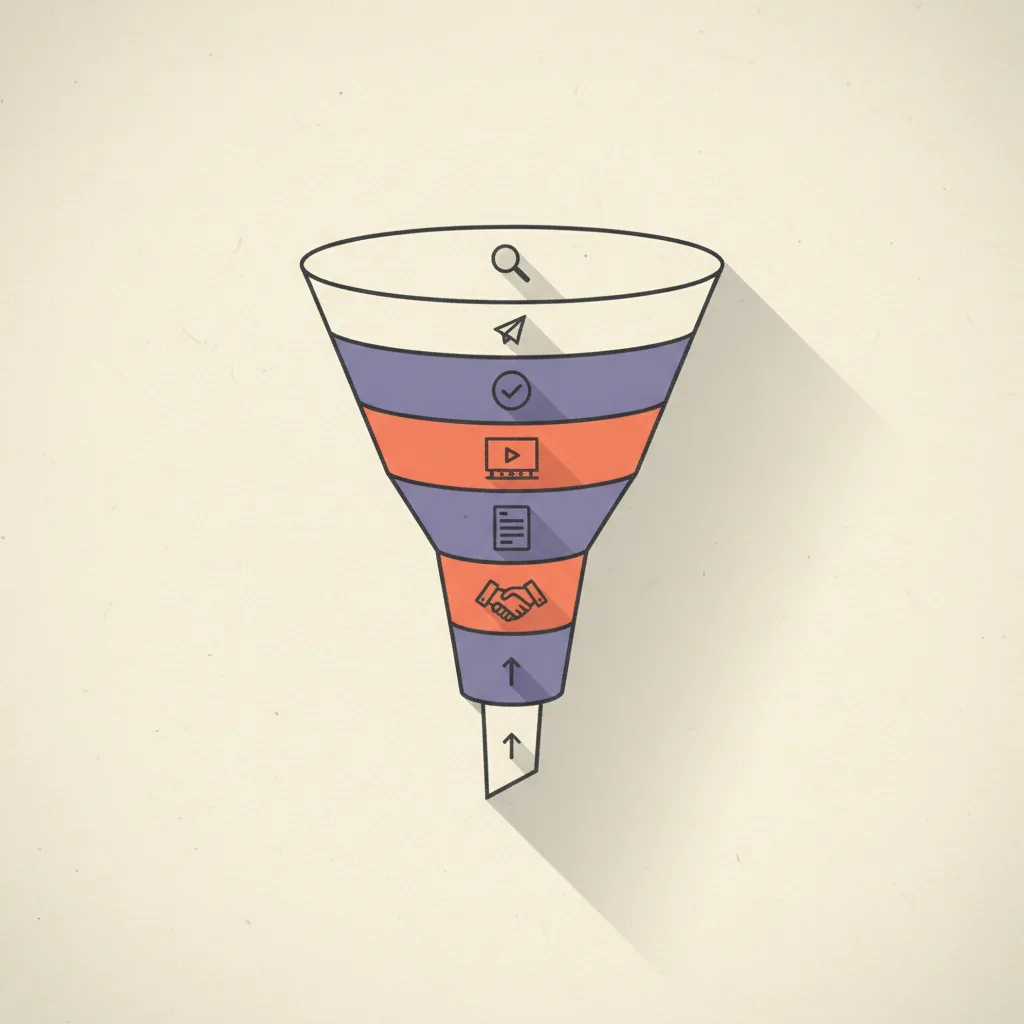
A B2B sales team running 4 SDRs at $87,000 fully-loaded each costs $348,000 a year for roughly 800 booked meetings. The same 800 meetings on an AI SDR stack costs about $2,400 a year — a 145x cost gap that looks like the obvious play. Then 60% of those AI-booked meetings show up unqualified, the close rate craters, and the cost per closed deal goes up, not down. The math on AI sales replacement only works after the qualification layer gets redesigned.
Most "AI for sales" content is either vendor-pitched (Salesforce, Gartner, IBM) or generic listicles ranking 12 use cases that close deals. Neither tells you what to build first or where the failure modes hide. This post maps AI across all 7 stages of a B2B sales funnel, walks the actual tooling at each stage, lays out the build order most teams should follow, and calls out the failure modes operators hit at quarter two. Numbers below come from active client work and tool billing in late April 2026.
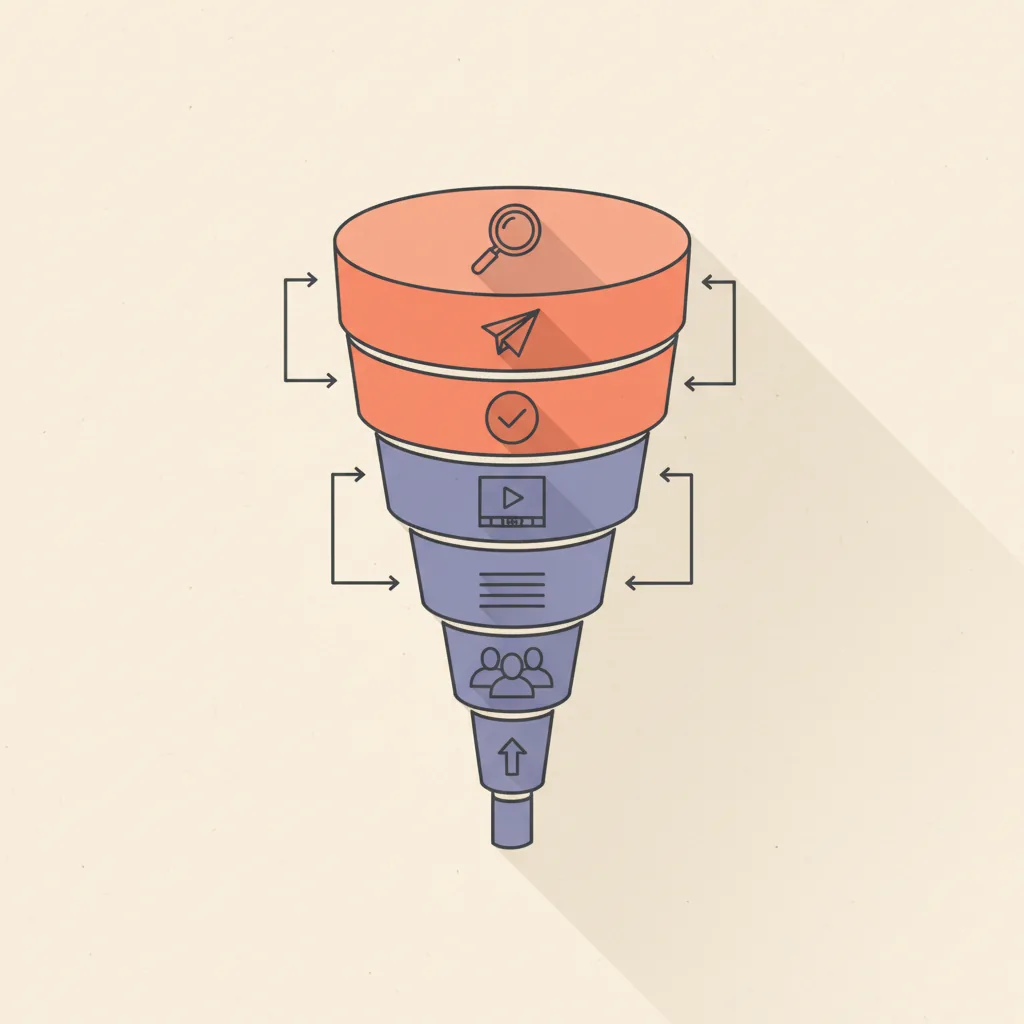
The 7 stages where AI lands
Each stage has a different surface area, different tooling, and a different way of failing. Treating "AI for sales" as one thing produces engines that look impressive on a demo and fail at a quarterly business review.
| Stage | What AI does | Primary metric | Failure mode |
|---|---|---|---|
| 1. Prospecting | ICP detection, signal mining, enrichment | Qualified-lead volume | AI surfaces noise, not buyers |
| 2. Outbound | Cold email + LinkedIn at volume, personalization | Reply rate, meeting-book rate | Robotic templates, domain reputation damage |
| 3. Qualification | Auto-routing, scoring, pre-meeting research | Show-up rate, qualified-meeting rate | Show-up high, fit low; AEs waste time |
| 4. Discovery / demo | Real-time call coaching, transcription, follow-up draft | Stage advance rate | AE leans on AI; conversation quality drops |
| 5. Proposal / negotiation | Proposal generation, contract analysis, redline review | Proposal-to-close rate | AI hallucinates pricing terms; legal flags |
| 6. Close / onboarding | Handoff automation, kickoff prep | Time-to-first-value | Onboarding becomes templated; churn risk |
| 7. Expansion / retention | Usage signals, churn risk, upsell scoring | Net revenue retention | Signals drive premature outreach; account fatigue |
Stage 1: Prospecting
The top of the funnel is the highest-leverage AI stage in 2026 because the data layer matured. ICP detection, signal mining, and contact enrichment used to take a junior researcher half a day per account; AI does it in 30 seconds and at higher fidelity.
- Apollo.io — $49–$149/mo per user. Best general-purpose contact + intent database. Reasonable enrichment, decent signal mining (job changes, funding events, hiring intent).
- Clay — $149–$800/mo. The power-user pick for custom enrichment workflows. Lets you wire 80+ data providers into one table and run AI prompts per row. Steeper learning curve.
- Common Room — $999+/mo. Tracks signals from Slack, Discord, GitHub, LinkedIn, podcasts. Best for product-led-growth motions where the buyer is already in your community.
- LeadMagic / Default — $99–$500/mo. Lighter alternatives focused on cleaner waterfalls and fewer false positives.
What good looks like at this stage: a 100-account ICP list, enriched with 5+ signals each, scored and ranked, ready to feed outbound. What bad looks like: a 10,000-row contact dump from Apollo with no scoring layer, fed directly to the email tool.
Stage 2: Outbound
AI cold email and LinkedIn outreach at volume is the most over-built and under-thought area in the AI sales stack. The tools are mature; the operator discipline is not. Volume without targeting damages your domain reputation faster than it builds pipeline.
- Smartlead.ai — $39–$99/mo. The cold-email infrastructure pick. Inbox warmup, multi-domain rotation, deliverability monitoring. Pair with a good ICP list, not a scraped one.
- Instantly.ai — $30–$97/mo. Direct competitor to Smartlead with similar feature set. Pick on UI preference.
- Reply.io / Outreach — $59–$200/mo per user. Multi-channel sequencing (email + LinkedIn + voice). Heavier; better fit for SMB-and-up SDR teams that need real reporting.
- 11x.ai (Alice) / Regie.ai / Bosh / Artisan — $1,500–$5,000/mo. The autonomous AI SDR replacement category. Generates copy, sends sequences, replies to inbound, books meetings. Quality varies wildly; do a 60-day pilot before committing.
The unsolved problem: AI-generated cold email at scale is what poisoned domain reputation in 2025 and triggered Google's and Microsoft's tighter SPF/DKIM/DMARC enforcement in 2026. Teams that ship AI outbound without rotating sender domains, monitoring spam folder placement, and pulling the trigger on plain-text + signature-only formats see reply rates collapse within 6 weeks.
Stage 3: Qualification (the layer most teams skip)
Qualification is the highest-leverage and most under-invested AI layer in the typical B2B stack. The tools at the prospecting and outbound stages produce volume; without a qualification layer, that volume becomes a calendar full of bad meetings.
- Default — $400–$1,500/mo. Inbound routing, scoring, pre-meeting enrichment in one product. The cleanest "AI between form-fill and AE calendar" pick we audit on client stacks.
- Chili Piper — $20–$45/user/mo. Routing and instant booking. Less AI-flavored, more reliable.
- Calendly + AI prep tools — $20–$50/user/mo combined. Calendly handles booking; pair with Crystal Knows or a custom Claude script for pre-meeting research briefs.
- Custom-built scoring layer — internal tool wrapping Claude or GPT around your CRM data. The highest-leverage build for any team past 200 inbound meetings/month.
What good looks like: a meeting that lands on an AE's calendar comes with a 2-paragraph brief — who the prospect is, what they signaled interest in, what the recent fundraise/headcount/tech-stack data says, what the AE should ask first. What bad looks like: a Calendly invite with a name and an email, and the AE Googling the company in the 30 seconds before the call starts.
Stage 4: Discovery / demo
Real-time call coaching and post-call automation are the visible-tier of the sales AI stack. Most teams overweight tooling here because the demos are impressive. The leverage is real but secondary to stages 1–3; a team with great Gong notes on bad meetings is worse off than a team with mediocre notes on qualified meetings.
- Gong — $1,200+/seat/year. The category leader. Strongest at deal-level analytics, manager review, deal-risk flagging. Heavy and expensive.
- Chorus.ai (ZoomInfo) — similar pricing to Gong. Bundled with ZoomInfo licenses; pick this if you already pay for ZoomInfo.
- Fathom / Granola / Avoma — $14–$50/mo per user. Lightweight transcription + AI summarization + follow-up email draft. The pick for under-50-person sales teams.
- Read.ai / tl;dv — $20–$30/mo. Simpler note-takers with weaker manager-review tooling.
The under-discussed risk: AEs who lean on AI summaries instead of taking real notes lose context retention across the deal cycle. A 10-call deal where every call was summarized by AI but never re-read produces an AE who knows nothing about the prospect by call 11. The tooling helps; the discipline of reviewing the AI output is what compounds.
Stage 5: Proposal / negotiation
AI proposal generation and contract analysis is mature enough to ship but legally riskier than the upstream stages. AI hallucinations on pricing terms or scope language create real liability; every output at this stage needs human review before send.
- DocuSign Contract AI / Ironclad CLM — enterprise-priced. Redline review, clause analysis, risk flagging. The right tool for legal-heavy sales motions.
- Tome / Pitch / Beautiful.ai — $15–$50/mo per user. AI-generated decks. Useful for proposal narrative; the financials still need a human.
- PandaDoc / Proposify — $19–$65/user/mo. Proposal-specific tooling with AI assist for sections. Stronger than general slide tools for SOW-style proposals.
- Custom Claude / GPT pipelines — best for templated proposals with high volume. Plug your CRM data into a Claude prompt with a fixed proposal template.
Stage 6: Close / onboarding handoff
The handoff from sales to customer success is where deals start to churn. AI at this stage is mostly about making sure the context an AE built up gets transferred cleanly to the CS team.
- HubSpot AI / Salesforce Einstein — bundled. Handoff briefs, automated kickoff sequences, deal context summarization for the CS team.
- Pylon — $59–$229/mo. B2B customer support and onboarding hub with AI features. Strong fit for technical B2B sales motions.
- Custom Claude prompts — generate a CS-onboarding brief from the AE's CRM notes and call transcripts. Cheap, effective, owns the data.
Stage 7: Expansion / retention
AI usage-signal monitoring and churn-risk scoring are real wins for any team past $500k ARR. The trap is using the signals to drive premature outreach.
- Catalyst / ChurnZero / Vitally — enterprise-priced. Usage scoring, health indicators, expansion-risk flagging. Best for $1M+ ARR motions.
- Default expansion module — included with their qualification product. Lighter pick for SMB-up motions.
- Custom usage-signal scripts — n8n or Zapier flows pulling product-usage data from your warehouse and flagging at-risk accounts. Cheap to build, owns the data.
The discipline: signals trigger AE attention, not AE outreach. A drop in usage means an AE should review the account, not auto-fire a "we noticed you stopped using X" email.
The cheap stack vs the expensive stack
Most "AI for sales" SaaS pitches sell you a $3,000–$10,000 a month all-in-one platform that wraps the same components you can wire together for $500–$2,000 a month. The math:
| Stage | Cheap stack | Mid stack | Expensive stack |
|---|---|---|---|
| Prospecting | Apollo + custom Claude | Clay | Common Room enterprise |
| Outbound | Smartlead + Claude copy | Reply.io | 11x.ai or Regie |
| Qualification | Calendly + Claude prep | Default | Default Enterprise + Outreach |
| Discovery | Fathom or Granola | Avoma | Gong |
| Proposal | PandaDoc or custom Claude | PandaDoc Business | DocuSign CLM |
| Close / onboarding | HubSpot Free + Claude briefs | HubSpot Sales Pro | Salesforce + Pylon |
| Expansion | Custom n8n usage scripts | Default expansion | Catalyst or ChurnZero |
| Total / month | $700–$1,500 | $2,000–$3,500 | $5,000–$10,000 |
Build order: which stage first
The right first stage to automate depends on where your sales motion currently bleeds. Three patterns we see:
| If your bottleneck is... | Build first | Build second | Why |
|---|---|---|---|
| Not enough qualified meetings | Stage 1 (prospecting) | Stage 3 (qualification) | Volume is downstream of ICP precision |
| Meetings are unqualified | Stage 3 (qualification) | Stage 1 (prospecting) | Fix the screen before turning up the volume |
| Reps inconsistent on calls | Stage 4 (discovery) | Stage 5 (proposal) | Coaching tooling lifts the floor |
| Pipeline forecasts are unreliable | Stage 4 (discovery) | Stage 6 (close) | Call data feeds forecast accuracy |
| Existing customers are churning | Stage 7 (expansion) | Stage 6 (close) | Retention math beats acquisition math |
| Cold outbound is dead | Stage 1 (prospecting) | Stage 2 (outbound) | Better targeting before higher volume |
A reasonable build pace: pick one stage, give it 4–8 weeks of editorial calibration before adding the next. Stacking three stages of new tooling in the same quarter is the most common reason AI sales projects fail at the second QBR.
How can AI be used in the sales process?
Across all 7 stages above, AI does four jobs in sales: data lookup (who is this prospect, what have they signaled), draft generation (write the email, the proposal, the kickoff brief), pattern recognition (which deals look like ones we won, which look like ones we lost), and routing (this lead goes to that AE, this account is at risk).
The most valuable single use case in 2026 for most teams is qualification-layer automation: turning a Calendly form-fill into a 2-paragraph AE brief in the 60 seconds before the call. It is unglamorous but compounds across every meeting and prevents the volume-without-qualification trap that kills most AI sales projects.
What is the 10/20/70 rule for AI in sales?
The 10/20/70 rule is a McKinsey/IBM allocation framing: 10% on algorithms, 20% on technology, 70% on people and process change. Applied to a sales motion: 10% picking the model (Claude, GPT, the underlying LLM behind your AI sales tool), 20% on the stack (CRM, prospecting tools, outbound platform, call recorder, proposal tool), and 70% on the rep training, the call review process, the qualification rubric, and the handoff discipline.
Teams that invert this ratio — spending 70% on tooling and 10% on enablement — produce sales orgs that look great in a demo and underperform in pipeline review. The leverage is in process, not platforms.
What we run for digicore101's own sales motion
We are not a 50-person sales org; we run the cheap stack on every stage with one or two specialty picks where the leverage is highest. The current setup:
- Prospecting — Apollo + custom Claude scoring scripts. ICP signals from job changes and tech-stack detection feed weekly into outreach lists.
- Outbound — Smartlead with rotating sender domains, Claude-generated personalization per row, plain-text format. We do not run autonomous AI SDR replacement; the volume does not justify it.
- Qualification — Calendly + a custom Claude pre-meeting brief script that pulls company data, recent funding, and stated need from the booking form. The script generates a 2-paragraph brief that hits our inbox before the call.
- Discovery — Granola for transcription and post-call summaries. We review the summaries within 24 hours; the discipline matters more than the tool.
- Proposal — Custom Claude templates fed by CRM data. Most proposals go out within 2 hours of the discovery call.
- Close / expansion — HubSpot Free + custom n8n flows for kickoff brief generation and at-risk-account flagging.
Total monthly tooling cost: under $400 across the entire sales motion. The leverage is in the briefs and the discipline of reviewing what AI produces, not in any single tool. See our take on HubSpot vs Salesforce for the CRM layer of this stack, and what is GoHighLevel for the agency-flavored alternative.
Common failure modes
Patterns we see in audits of broken AI sales engines:
- Volume without qualification — flipping on AI outbound without an AI qualification layer. Calendar fills with bad meetings; AEs burn out on no-shows; CAC rises.
- Replacing reps before fixing the process — buying 11x.ai or Regie before the qualification layer works. AI amplifies a broken sales motion at lower per-unit cost; the per-deal cost goes up because the close rate drops.
- Treating the LLM as the product — fine-tuning models, prompt-engineering for hours, building elaborate writing pipelines. The model is good enough; the prospecting list and the qualification rubric are the leak.
- Domain reputation collapse — sending AI-generated cold email at volume from a single domain without warmup or rotation. Reply rates crater within 6 weeks; recovery takes 3–6 months.
- AE deskilling — over-relying on AI call summaries and losing context retention. By call 11 of a complex deal, the AE has no operating memory of the prospect.
- Premature expansion outreach — using usage-signal scoring to fire automated outreach instead of routing the signal to a human AE for review. Account fatigue, churn risk goes up not down.
Will AI replace sales reps?
Not at the high end of the funnel. The conversation about complex B2B deals — discovery, technical fit, executive alignment, negotiation — is still meaningfully better with a human. Where AI is replacing reps in 2026 is at the low end: Tier-3 inbound triage, lightweight qualification, follow-up nurture, customer-success ticket routing. Roughly 30–40% of typical SDR and CSM tasks are at risk of full automation by end of 2026; senior AE and enterprise CSM roles are not, and the pricing power of those roles is going up because the rest of the org needs them more.
The realistic operator framing: AI is reshaping what sales work looks like, not eliminating it. Teams that lean into the reshape (smaller teams, higher leverage per rep, AI-assisted at every stage) are outperforming teams that try to hold the line on traditional headcount or fully replace.
Where this is heading
Four moves to watch in the AI sales space over the next year:
- Autonomous AI SDR products are consolidating. The 11x / Regie / Bosh / Artisan category had ~30 entrants in early 2025; expect 4–6 survivors by end of 2026 as the deliverability problem forces real differentiation.
- Qualification-layer tooling is the next category to mature. Default and the next wave of "AI between form-fill and AE calendar" products will become standard infrastructure for B2B sales orgs by mid-2027.
- Sales coaching tools (Gong, Chorus) are commoditizing at the lightweight end. Granola, Fathom, and Avoma are eating Gong's under-50-person market segment.
- CRM platforms are bundling AI aggressively. HubSpot AI and Salesforce Einstein are improving fast enough that point-solution add-ons need a real reason to exist by end of 2026.
Most of the noise in AI sales right now is about replacement — fewer reps, more autonomy, lower spend. The interesting work is at a different layer: redesigning qualification and call-review so that the rest of the funnel actually compounds. Replacement is a tactical move on a single line item. Process redesign is what changes the unit economics of the whole motion. The teams two quarters ahead are doing the second one quietly while the rest of the market argues about the first.
We build these stacks for clients as part of our AI Automation Audit and custom builds. The full multi-stage setup pays for itself within 90 days for any team running 4+ SDRs or 10+ AE meetings a week. See what is an AI agent for the underlying agent architecture, and how to build an AI content engine for the content layer that feeds the top of this funnel.