
Most "AI for ads" coverage is about creating ads. Autonomous ad management is the opposite — managing the ads you already have. Which is where the real spend leverage lives, and where Meta and Google have been quietly automating for the last 18 months without most operators noticing what changed.
This post is a concept piece, not a how-to. It maps what "autonomous ad management" actually means in 2026, what the platforms do natively now, where the third-party layer earns its keep, and what we ship when clients have playbook complexity beyond what SaaS can configure. Pricing and capability notes below are current to late April 2026. The companion how-to lives in our AI for business operations guide, which covers the broader operator-side AI category this sits inside.
What "autonomous ad management" actually means in 2026
Two phrases in marketing get conflated and they should not. AI ad creation is generating the creative — the static, the script, the UGC-style avatar video. Autonomous ad management is what happens after the creative is live: the system watching CPA, ROAS, frequency, and creative fatigue across every active ad, then taking action without an operator clicking pause or shifting budget by hand.
| Dimension | AI ad creation | Autonomous ad management |
|---|---|---|
| What it does | Generates new ads from a brief | Manages the ads already running in market |
| Trigger | Operator asks for a new variant | Performance signal crosses a threshold (CPA drift, ROAS slip, frequency cap) |
| Output | A creative file ready to upload | A campaign state change (budget shift, pause, scale, audience expand) |
| Failure mode | Creative that does not convert | Wrong action on live spend that compounds losses fast |
| Where leverage lives | Volume of variants tested | CAC reduction on the spend you are already running |
| Most discussed in 2026 | Heavily | Quietly |
What the platforms do natively now
Meta, Google, and TikTok each ship a flagship autonomous product bundled with ad spend. None costs extra; all three are now the default path for new campaigns inside their respective ad managers. Honest take on each:
| Platform | Product | Strong at | Weak at |
|---|---|---|---|
| Meta | Advantage+ Shopping / Sales / App campaigns | DTC volume, broad-audience scaling, creative rotation across many variants | B2B brand campaigns where conversion events are sparse; multi-objective campaigns where the model picks the cheapest goal not the most valuable one |
| Performance Max | Cross-Google-property reach (Search, YouTube, Display, Discover, Maps) from one campaign | Channel transparency — operators cannot see which surface drove which conversion, makes attribution debugging hard | |
| TikTok | Smart+ | Creative learning velocity, native UGC scaling, lower-funnel ecommerce | Brand campaigns and lookalike-audience precision; thin reporting compared to Meta |
The honest read: for any DTC brand under roughly $200k/mo in ad spend, the native platform layer alone covers 70–80% of the autonomous management you need. The third-party layer earns its keep when you need cross-platform orchestration, when your playbook has rules the native UI cannot encode, or when reporting transparency matters more than the platform allows.
What the third-party layer adds
Three reasons to add a layer on top of platform AI: cross-platform unification, playbook complexity, and reporting independence. The vendors below sort along those axes.
- Smartly.io — enterprise pricing, typically $10k+/mo. The category leader for agencies and large in-house teams that run on Meta + Google + TikTok + Pinterest simultaneously and need one orchestration layer that speaks to all of them. Strong on creative production and cross-platform autonomous bidding rules.
- Madgicx — $59 to $300+/mo. SMB-up autonomous bidding plus creative scoring on top of Meta. Useful for DTC brands that want more visibility and rule customization than Advantage+ alone gives, without enterprise pricing.
- Pencil — roughly $119 to $499/mo. Sits closer to the creative side than pure management; generates ad variants, scores them, and auto-rotates winners into Meta. Good fit for brands whose bottleneck is creative volume rather than account management.
- AdManage.ai, Cometly, and the newer wave — $30 to $200/mo per seat. The 2026 cohort of AI ad managers. Lighter than Madgicx, heavier than spreadsheets. Useful for media buyers managing many small accounts.
The pattern across all of them: vendors charge for what the native platforms cannot or will not do — cross-platform reporting, audit-trail history of every autonomous decision, and rule logic that goes beyond the native dropdowns. Worth paying for if your team operates across three or more platforms or if your playbook would not survive being squeezed into a Meta campaign settings panel.
The custom build pattern — n8n + Meta Marketing API + Claude
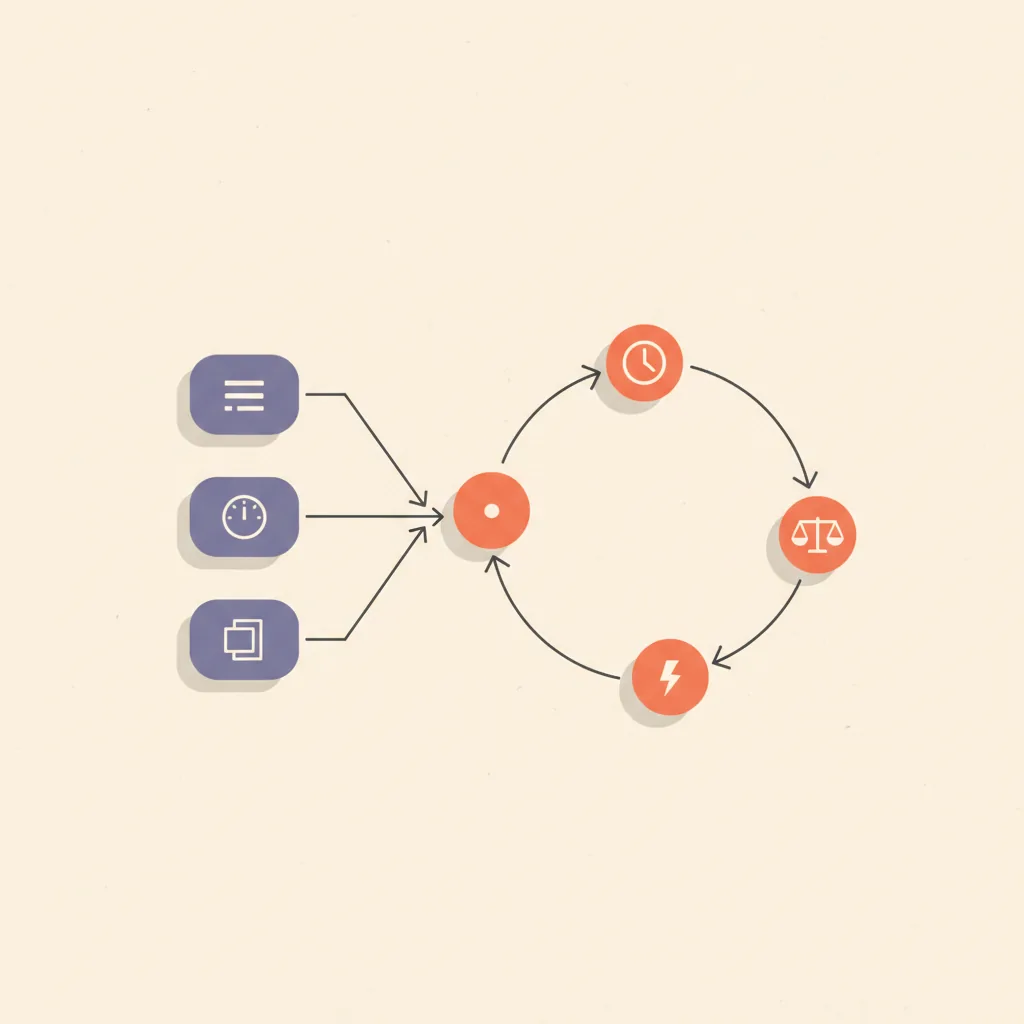
The pattern we ship for clients whose playbook complexity exceeds what SaaS can configure. The architecture is straightforward: an n8n flow polls the Meta Marketing API every 30 to 60 minutes, pulls the current state of active campaigns, runs each one through a Claude prompt that has the playbook embedded, and either drafts a recommendation for human review or executes the change directly via the same API.
- Trigger layer — n8n cron pulls campaign metrics from Meta and Google APIs at a defined cadence. Faster than 15 minutes is usually noise; slower than 4 hours misses real drift events.
- Context layer — pulls 7 to 28 days of rolling performance data per ad set, plus account-level context (current spend pace, daily cap remaining, recent creative-fatigue scores).
- Decision layer — Claude reads the context and applies the playbook: scale this winner by 20%, pause this loser, shift budget from underperforming ad set A to overperforming ad set B, expand audience on this winner.
- Action layer — executes via the Meta Marketing API or Google Ads API. Irreversible actions (pausing high-spend campaigns, large budget shifts) stay queued for human approval; small reversible actions go autonomously.
- Log layer — every decision and outcome writes to a Supabase table, which feeds a weekly review where the playbook gets refined.
Cost: roughly $20 to $50/mo in infrastructure (n8n, Claude API tokens, Supabase) plus the ad spend itself. The reason this beats SaaS for some clients is not price — it is that the playbook lives in version-controlled code, every decision is auditable, and the rules can encode logic that no vendor UI exposes.
What can be automated vs what still needs operator judgment
The line between "let the agent run" and "keep humans in the loop" is sharper than most vendors admit. Three categories below.
| Decision | Verdict | Why |
|---|---|---|
| Pause underperforming creative | Automate | Reversible; bad pause is recoverable in minutes |
| Scale winning ad set budget by 10–30% | Automate within caps | Bounded risk if cap is set right; compounds gains when correct |
| Shift budget between ad sets in same campaign | Automate | Reversible, internal-only, low blast radius |
| Pause an entire campaign | Human-in-the-loop | Reversible but high blast radius — operator should confirm |
| Launch a new campaign | Human | Strategy decision, not optimization |
| Define the audience | Human | Strategic; agent has no view of brand fit or downstream LTV |
| Approve creative briefs | Human | Brand voice and positioning decision |
| Choose the attribution model | Human | Determines what counts as "winning" — agent inherits the answer, cannot pick it |
The single most common failure pattern: teams hand attribution to the platform AI ("trust the conversion event you set up two years ago"), the platform optimizes against it ruthlessly, and 90 days later spend is up, reported ROAS is up, and actual revenue is flat. Autonomous management amplifies whatever you point it at. Pointing it at the wrong thing is the most expensive error available.
Which AI is best for ads?
Asked often enough that it deserves a direct answer. There is no single best; the right pick depends on stage, spend level, and how much of the playbook you need to control.
- Sub-$20k/mo ad spend, single-platform DTC — Meta Advantage+ alone or Google Performance Max alone. The native layer covers most of what you need; adding a third-party tool at this stage is overhead, not leverage.
- $20k–$200k/mo, single platform with a sharper playbook — Madgicx on top of Meta, or Pencil if creative volume is the bottleneck. Worth the $59 to $499/mo for the rule customization and reporting.
- Multi-platform agency or brand running across Meta + Google + TikTok — Smartly.io or a similar enterprise orchestration layer. The cross-platform unification is what the native tools cannot give you.
- Any team whose playbook does not fit a vendor UI — custom n8n + Meta API + Claude. The reason to build this is not cost, it is control over the decision logic and full auditability of every autonomous action.
- Best AI for the creative layer specifically — different question, different post. See best AI video ad tools and AI image generators compared for that side of the stack, and what is AI UGC for the synthetic-creator format.
Common failure modes
Patterns we see in audits of autonomous ad setups that broke at the 60–90 day mark:
- Over-trusting platform AI on attribution — letting Advantage+ or Performance Max optimize against the conversion event you set up years ago, without revisiting whether that event still reflects business value. The agent gets very efficient at hitting a number that no longer matters.
- No kill criteria written down — campaigns and ad sets keep running on autonomous management because nobody defined the conditions under which the agent should stop. Spend drifts; reported ROAS holds because the platform is gaming a soft signal; cash burns.
- Attribution drift — switching attribution windows or models mid-flight (7-day click vs 1-day view, or platform reporting vs MMM) and not telling the agent. Now its baseline shifts under it and every decision it makes references the wrong reality.
- Stacking too many autonomous tools at once — running Advantage+ and Madgicx and a custom n8n flow on the same account simultaneously. The three layers fight each other; nobody can tell which one made which change.
- No log layer — running the autonomous loop without writing decisions and outcomes anywhere. Cannot debug, cannot improve, cannot earn graduation to higher autonomy on more decision types.
- Skipping the human checkpoint on irreversible actions — letting the agent pause large campaigns or expand audiences without review. The first time a misjudged pause kills a working campaign, organizational tolerance for the whole project collapses.
Where this is heading
Watch list for the next 12 months on this category specifically:
- Native platform autonomous products will keep widening their default footprint. By end of 2026, the share of Meta and Google ad spend running through Advantage+ or Performance Max will likely cross 70%. Choosing not to use them becomes its own active decision.
- The third-party layer will compress. Several of the smaller "AI ad manager" SaaS tools that launched in 2024 and 2025 will not survive the platform AI getting better; the ones that survive will be the ones that solve cross-platform orchestration or reporting independence, not the ones that wrap a single platform with a thin UI.
- Custom builds get more common at the mid-market. As Claude and similar models become cheap enough that a per-account autonomous loop costs single-digit dollars per month in tokens, the build-vs-buy line shifts. Agencies in particular are starting to ship custom flows per client rather than paying enterprise SaaS per seat.
- Attribution becomes the contested layer. Whoever owns the truth about what counts as a winning conversion controls which autonomous decisions look smart. Expect MMM (marketing mix modeling) tools and incrementality-test platforms to grow into the decision layer alongside ad-platform reporting.
The teams two quarters ahead of the conversation in late 2026 are not the ones with the loudest AI ad creative. They are the ones running disciplined autonomous management on top of disciplined attribution, with a clear human-in-the-loop policy on the decisions where judgment still matters.
We build autonomous ad management stacks for clients as part of our Facebook Ads management offering and our AI Stack Audit. The custom n8n + Meta API + Claude pattern is part of our custom builds service, and the creative side sits inside AI Creative for marketing.